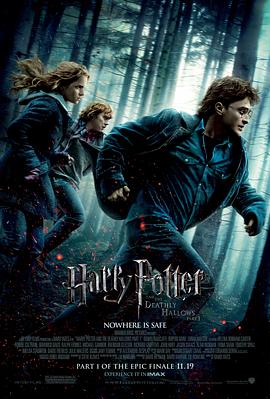
《哈利·波特与死亡圣器》小站 http://site.douban.com/108361/ 邓不利多死后,伏地魔(Ralph Fiennes 饰)与食死徒入侵魔法学校,魔法部也被伏地魔的爪牙操控,邪恶的阴云笼罩魔法世界上空。在哈利·波特(丹尼尔·雷德克里夫 Daniel Radcliffe 饰)17岁生日之际,凤凰社成员及一众好友护送他回到了凤凰社的据点陋居,然而这立即遭到食死徒毁灭性地打击。哈利和罗恩(鲁伯特·格林特 Rupert Grint 饰)、赫敏(爱玛·沃特森 Emma Watson 饰)侥幸逃亡,并且按照邓不利多的嘱托继续寻找伏地魔的魂器。死亡的威胁时刻逡巡左右,他们还要面对友情的考验。在寻找摧毁魂器方法的过程中,死亡圣器的面纱也渐渐揭开。 与此同时,为了置哈利于死地,伏地魔也在寻找最后一件死亡圣器。最后的决战即将到来……
转自:http://www.filmlinc.com/nyff/2010/views-from-the-avant-garde-friday-october-1/views-from-the-avant-garde-jean-marie-straub
“The end of paradise on earth.”—Jean-Marie Straub
The 33rd verse and last chant of “paradise” in Dante’s Divine Comedy. The film starts with verse 67, “O somma luce…” and continues to the end. “O Somma luce” recalls the first words uttered by Empedocles in Danièle Huillet and Jean-Marie Straub’s 1987 The Death of Empedocles—“O himmlisch Licht!…” (O heavenly light!). This extract from Hölderlin’s text is also inserted into their 1989 film Cézanne.
“O somma luce” invokes utopia, or better still “u-topos,” Dante, Holderlin, Cézanne… the camera movement, recalling Sisyphus, in the film’s long shots, suggests its difficulty.
In O somma luce, with Giorgio Passerone’s Dante and the verse that concluded the Divine Comedy, we find at the extremity of its possibilities, the almost happy speech of a man who has just left earthly paradise, who tries to fully realize the potential of his nature. Between the two we find the story of the world. The first Jean-Marie Straub film shot in HD.
So singular are the textual working methods of Straub-Huillet, and now Straub on his own, that it is hard to grasp how far reaching they are. Direction is a matter of words and speech, not emotions and action. Nothing happens at the edges, everything is at the core and shines from there alone.
During the rehearsals we sense a slow process by which ingredients (a text, actors, an intuition) progress towards cohesiveness. It is, forgive the comparison, like the kneading of dough. It is the assembling and working of something until it becomes something else… and, in this case, starts to shine. Actually it’s very simple, it’s just a question of opening up to the light material that has been sealed up. Here, the process of kneading is to bring to life and then reveal. The material that is worked on is speech. So it is speech that becomes visible—nothing else. “Logos” comes to the cinema.
The mise en scène of what words exactly?
The process of revealing, “phainestai” “phainomenon,” the phenomenon, is what take splace, what becomes visible to the eye.
Is “Straubie” Greece?
This mise en scène of speech, which goes beyond a close reading of the chosen text, is truly comes from a distant source.—Barbara Ulrich